Bathroom plumbing repair: what fails first
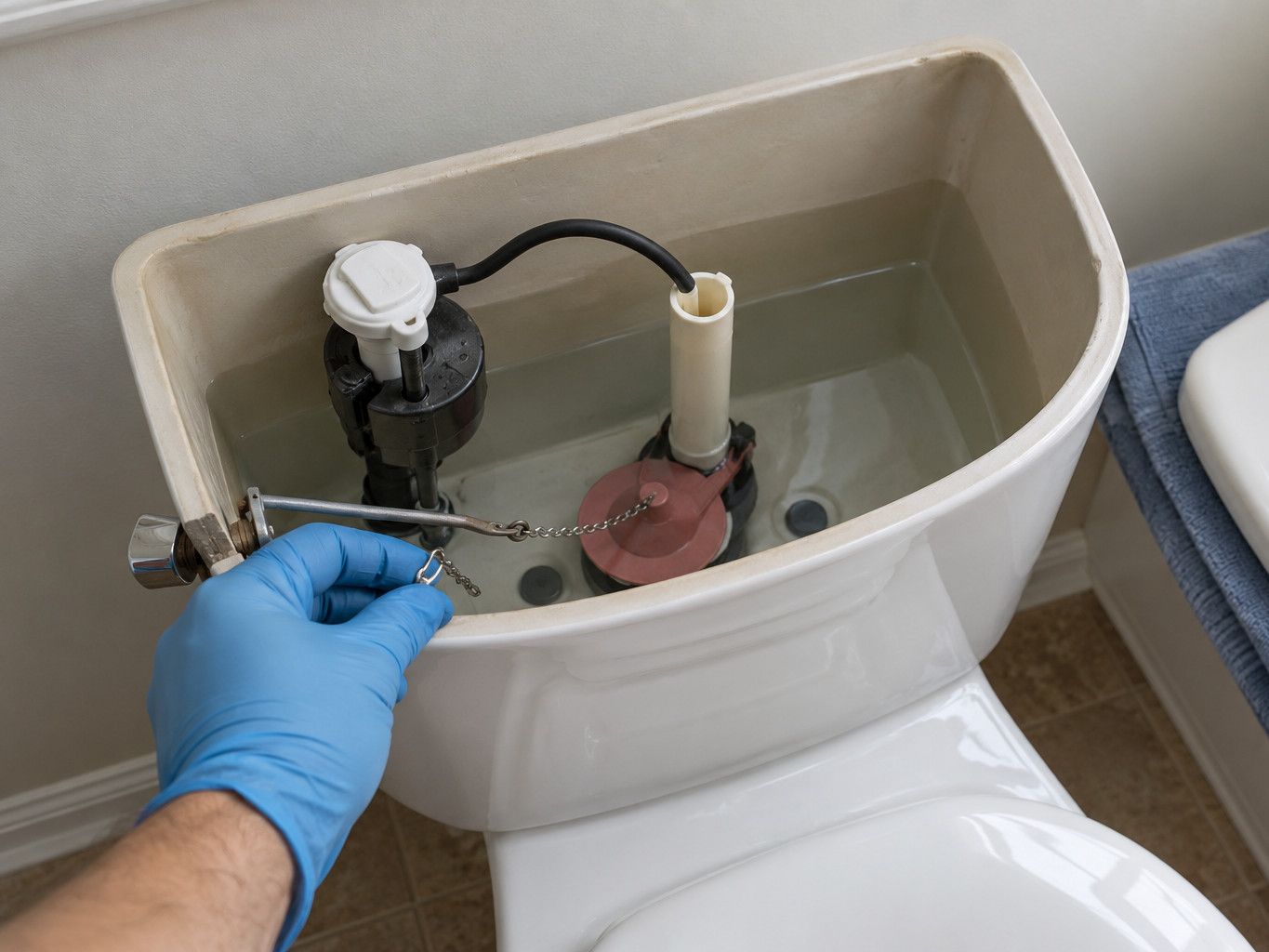
Bathrooms concentrate the fixtures that wear. Toilets run when the flapper or fill valve ages, rock when the wax seal or flange fails, and weaken when the rim holes scale over. Sink and tub faucets drip from worn cartridges or washers. Shower valves lose their temperature balance or leak behind the wall. EPA counts toilets as nearly 30 percent of an average home's indoor water use, which is why a silent toilet leak shows up on the bill.
Kitchen plumbing repair: sinks, disposals and dishwashers
In the kitchen, the drain does most of the suffering. Disposals jam and leak, P-traps clog with grease, and the dishwasher's discharge hose backs up when the sink drain slows. The dishwasher connection is also where the two model codes differ most visibly. The International Plumbing Code lets a household dishwasher discharge into the sink tailpiece or the disposal inlet if the hose loops up to the underside of the counter or runs through an air gap fitting. The Uniform Plumbing Code (§807.4) doesn't allow the connection without a listed dishwasher air gap, the small chrome cap you see on counters in many western states.
Typical repair prices by fixture
| Job | National range | Source |
|---|---|---|
| Toilet flapper | $60–$120 | Fixr, Jan. 2025 |
| Toilet fill valve | $60–$150 | Fixr, Jan. 2025 |
| Leaky faucet | $150–$350 | Fixr, Jan. 2025 |
| Shower cartridge | $100–$300 | Fixr, Jan. 2025 |
| Disposal: remove old, install new | $350–$700 | Fixr, Jan. 2025 |
| Sump pump installation (average $1,400) | $800–$2,000 | Fixr, Jan. 2025 |
| Water softener installation (average $2,500) | $1,100–$3,000 | Fixr, Jan. 2025 |
Sources: Fixr cost guides for toilet repair, shower repair, garbage disposal installation, sump pump installation and water softener installation, each updated January 31, 2025.
Repair or replace a fixture
- Is the body sound? A cracked toilet tank or bowl, a corroded faucet body or a rusted disposal housing can't be repaired.
- Are parts available? Cartridges for discontinued faucets can be hard to find, and a new faucet may cost little more than a rare cartridge and the time to hunt for it.
- Does the fixture waste water? A toilet from before the federal 1.6-gallon limit can use as much as 6 gallons a flush, EPA notes; WaterSense models use 20 percent less than the federal standard. Replacing one is often the better repair.
- Does replacement need other work? A new toilet with a different rough-in, or a faucet with a different hole pattern, turns a swap into a small remodel.
What a homeowner can safely check first
Before calling, it helps to know where the fixture's stop valve is and whether it closes. Every sink and toilet should have one, and a stop that is seized or drips when turned is worth replacing during the visit. The International Plumbing Code (§106.2) treats clearing stoppages and repairing leaks in valves and fixtures as work that needs no permit, which is why most fixture calls are quick. Replacing or rearranging valves, pipes or fixtures is different, and your jurisdiction may require a permit for it; our plumbing permit guide covers the line.
Guides by fixture
- Toilet repair
Running, rocking, leaking at the base or weak flushing, part by part.
- Faucet repair
Cartridges, washers, aerators and outdoor faucets that drip or stick.
- Garbage disposal repair
Humming, silent or leaking units, and when replacement is simpler.
- Sump pump repair
Float switches, check valves, discharge lines and battery backup.
- Water softener installation
Hardness testing, sizing in grains, drain rules and local salt limits.
- Shower valve replacement
Cartridge or full valve, scald limits, and opening the wall.
Fixture repair: common questions
Is it cheaper to repair a fixture or replace it?
For toilets and faucets, a repair part usually costs a fraction of a new fixture and the labor is similar, so repair wins until the fixture body is cracked, corroded or has no parts available. For disposals and sump pumps, replacement often costs little more than a repair visit.
Can a plumber install a fixture I bought myself?
Most will, though some won’t warranty parts they didn’t supply. Bring the model number to the call, so the plumber can check the rough-in size and the valve type before the visit.
Why does the plumber need the brand of my faucet?
Because cartridges and valve parts are specific to the manufacturer and often to the model year. A photo of the faucet and of any markings under the handle saves a second trip.
Do fixture repairs need a permit?
Repairs usually don’t. The International Plumbing Code exempts repairing leaks in valves and fixtures and removing and reinstalling a toilet, as long as no valves, pipes or fixtures are replaced or rearranged. Replacing a fixture or moving it is a different matter in many places.
Sources
- Toilet Repair Cost, Fixr, updated January 31, 2025.
- Shower Repair Cost, Fixr, updated January 31, 2025.
- Garbage Disposal Installation Cost, Fixr, updated January 31, 2025.
- Sump Pump Installation Cost, Fixr, updated January 31, 2025.
- Water Softener Installation Cost, Fixr, updated January 31, 2025.
- International Plumbing Code 2021, Chapter 1: Scope and Administration (§106.2, work exempt from permit), International Code Council.
- International Plumbing Code 2021, Chapter 8: Indirect/Special Waste (§802.1.5, dishwashers), International Code Council.
- Uniform Plumbing Code 2021 (§507.2 seismic strapping, §608.2 pressure regulators, §608.3 expansion tanks, §807.4 dishwasher air gaps), IAPMO.
- WaterSense: Residential Toilets, U.S. Environmental Protection Agency, updated May 29, 2026.
Reviewed September 27, 2026. Found an error? Write to admin@plumbingrepairquotes.com.